
Getting Rockingham County Court Records
Match the channel to the job. For everyday case information, current event history, and upcoming settings, go online. Use eCourts Portal Smart Search and Search Hearings. Want a paper document, a plain copy, or a certified copy? That is clerk work. The Rockingham County Clerk of Superior Court also serves walk-ins. They may need civil, criminal, estate, or special-proceeding information, an older paper file, or a Portal result that deserves a second look. A public self-service terminal in the clerk's office covers the same ground.
- Find the case number or party name in Portal when the public chronology or hearing is the goal.
- Use the clerk office or public terminal to inspect the county file when the Portal result is missing, incomplete, or too limited.
- Call the clerk at (336) 634-6000 to confirm the county-file route, copy availability, and any request details before payment.
- For a certified or exemplified document, ask the Rockingham County clerk that holds the case file rather than NCAOC.
One caution on mail requests. NCAOC accepts mail and online public-record requests. But they cover only Judicial Branch agency records. Neither is a shortcut to a Rockingham County case file. The clerk posts no Rockingham-specific mail copy procedure, so call the office before mailing anything. Before asking for copies at all, run a Rockingham County case lookup and locate the record. Note: A Portal Case Summary can point you to a court file. Yet only the clerk holds the actual county document.
Rockingham County Court Record Custody
North Carolina runs a unified clerk system. The clerk-record statute, G.S. 7A-109, puts everything in one place. The Rockingham County Clerk of Superior Court keeps the files, dockets, and indexes. It handles civil actions, criminal actions, special proceedings, estates, judgments, liens, and more. That single office is the county custodian for both Superior Court and District Court records. No state form can move a court document elsewhere. The county joined eCourts Track 9 on July 21, 2025. Portal, Enterprise Justice, and File & Serve replaced the old system. Paper documents from before the switch stayed at the clerk's office. Migration-period filings might lag in Portal. Later indexing brings them in. When an online search will not resolve a file, the clerk remains the reliable fallback.
Court Record Types
A single case produces several kinds of records. The online Case Summary or Register of Actions gives a near-real-time view of case information. It also lays out the chronology. Behind that timeline sits the clerk-held case file. It contains pleadings, orders, judgments, exhibits, and other filed material. A certified copy is different again, a clerk-authenticated copy made for an official purpose. The categories overlap in subject. They do not overlap in reach. The Rockingham County clerk system covers Superior Court District 22 and District Court District 22. Felonies and major civil actions belong to Superior Court. District Court takes misdemeanors, infractions, small claims, most family matters, juvenile matters, and magistrate proceedings. Both divisions feed the clerk and the Portal, though public access varies by case type.
Rockingham County Court Record Terminals
Online results leave you short? Try a public self-service terminal. The Judicial Branch says clerk offices offer terminal searches for criminal cases. You can search by defendant name, case number, victim, or witness name. Civil, special-proceeding, and estate information is on the terminals. You can also view the physical file at the clerk where the case is located. Access law and any restriction still apply. The Judicial Branch court-records page lays out the terminal and clerk-file access path.
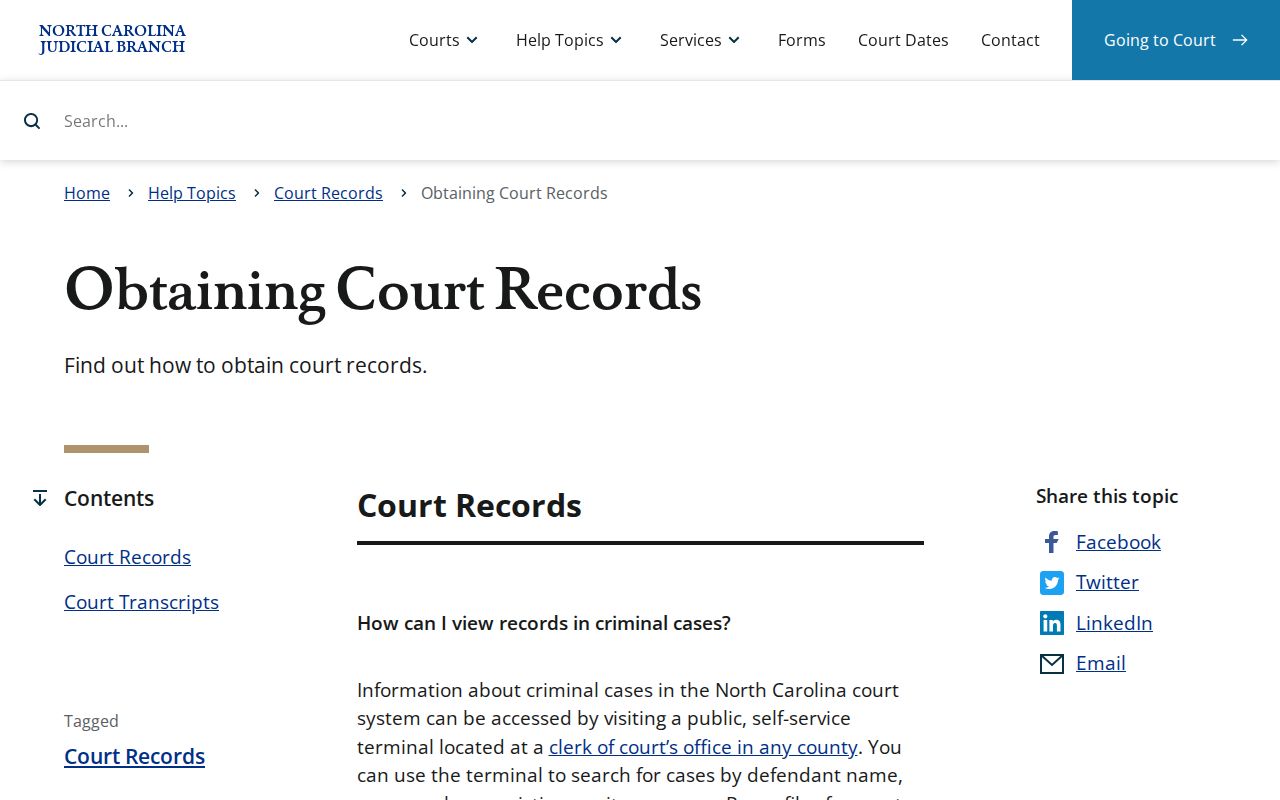
The terminal route earns its keep for older paper material, a Portal access problem, or a document image that never appears online.
Inside a Rockingham County Court Record
Portal's Case Summary is the best supported inventory of the online record. Treat it as a chronological view, not the certified file. Display blocks appear only when data exists. So an empty or missing section says nothing about the case itself. For a paper document or certification, the clerk-held file is still the source.
| Case Information | Basic case identity and number. |
|---|---|
| Assignment Information | Court or related assignment context when present. |
| Party Information | Named party roles in the public result, except victims. |
| Case Events | Chronological entries for filings, orders, settings, and other recorded actions. |
| Hearings and Dispositions | Current or recorded setting and outcome sections when Portal has data. |
| Financial Information | Case-related financial data when applicable. |
Civil, family, probate, and mental-health matters may also list causes of action. Document images carry their own availability and access limits, so the Case Summary does not promise remote viewing of every filed item.
Rockingham County Court Record Layers
Three layers, one common mistake. A Case Summary reports the public online chronology. A case file is the clerk-held collection of pleadings, orders, judgments, exhibits, and other filed material. A certified copy is a clerk-authenticated copy of an eligible document. One case can have all three. Yet a search result never becomes a certified document just because it shows an event or disposition.
NCAOC says it plainly. A case document may be certified by the clerk in the county where it was filed. The NCAOC records policy points the same way. It names the county clerk, not NCAOC, as custodian of the county court document.
Fees and Certified Copies
G.S. 7A-308 lists the clerk service fees that apply in Rockingham County. A copy charge combines a first-page amount with a smaller amount for each additional page. Certifying costs extra. A certificate under seal is its own charge. An exemplification is a separate statutory service on top of that. The clerk can confirm the exact total for your request before you pay.
| Clerk service | Published fee |
|---|---|
| First page of each document | $2.00 |
| Each additional page or fraction | $0.25 |
| Certificate under seal | $3.00 |
| Exemplification of records | $10.00 |
| Criminal record search | $25.00 |
Rockingham County Clerk of Superior Court
170 Hwy 65
Reidsville, NC 27320
Monday-Friday, 8:30 a.m. to 5:00 p.m.
(336) 634-6000
The NCAOC policies and procedures page covers agency records and copy practice, not county clerk case documents.
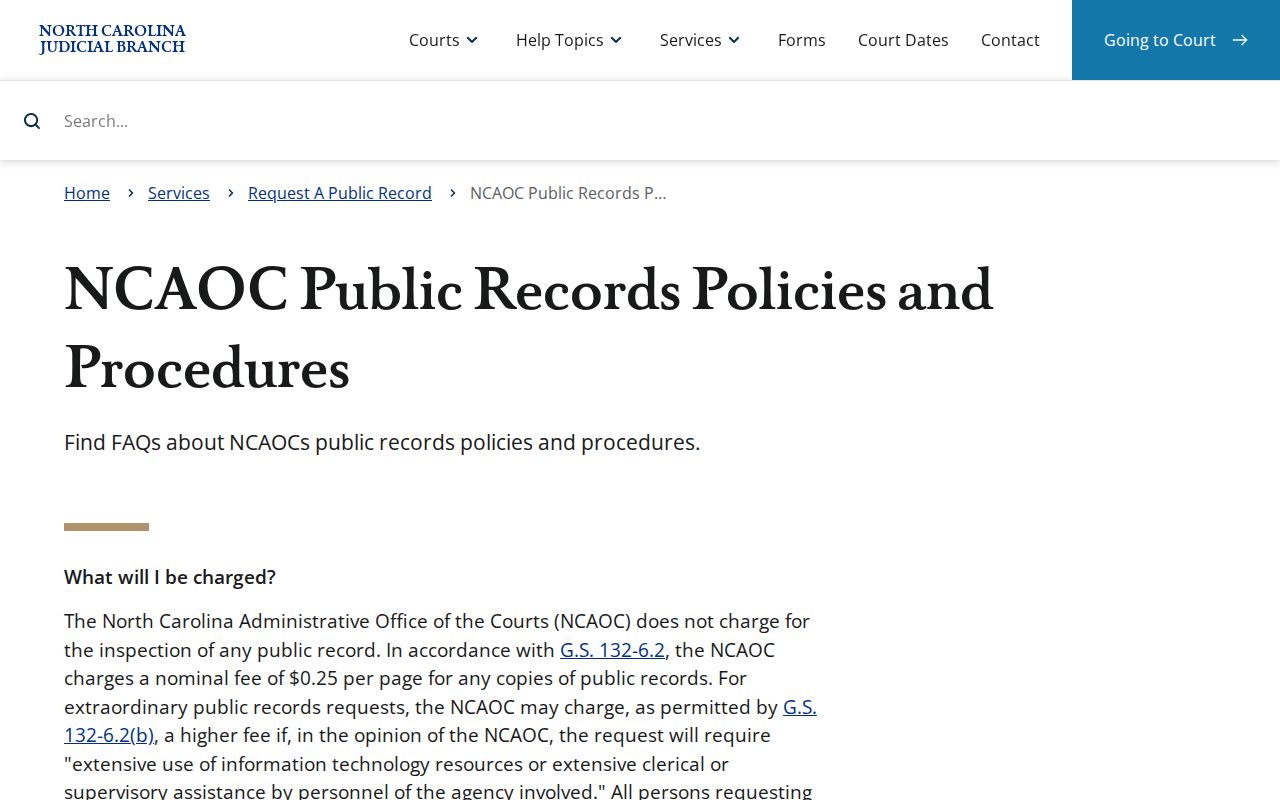
That NCAOC material works well for agency requests. Rockingham County court document fees and certification, though, follow the clerk's statutory services.
Rockingham County NCAOC Record Requests
NCAOC's public-record request form covers records that already exist at the Judicial Branch agency itself. It is not a way to order copies of a Rockingham County court file. That job belongs to the county clerk, as NCAOC makes clear.
The form asks who you are. Expect to give your name, a phone number, an email, a street address, city, state, and ZIP. Add an organization title when one applies. The request must be in writing. You can submit it online or by mail. Mailed copies go to Public Records Request, P.O. Box 2448, Raleigh, NC 27602.
Fees are modest. Looking at NCAOC's own public records costs nothing. Copied agency records run $0.25 per page, though a complex request can add charges. Timing depends on the work involved. Treat that as a rough guide rather than a promise for any county court docket.
The official NCAOC request form page lays out the state agency's request channel in full.
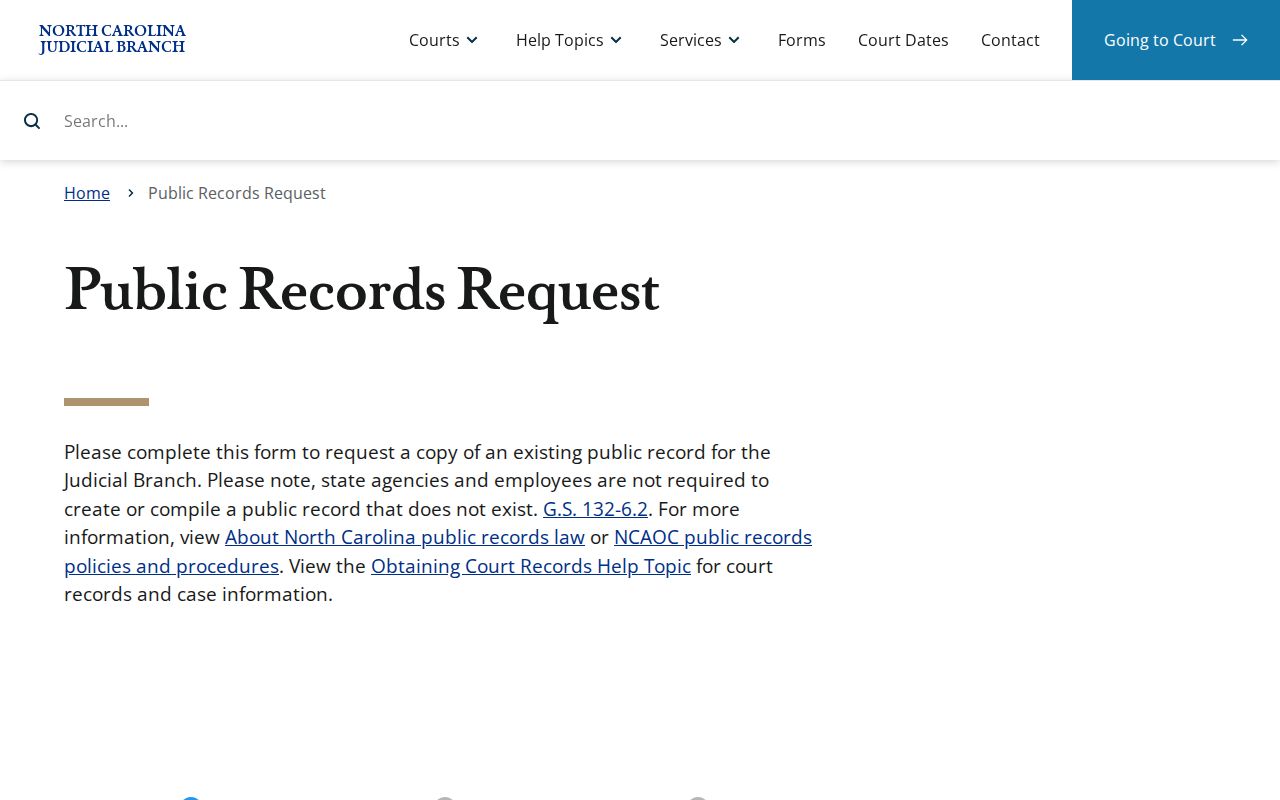
The form covers agency records only. The Rockingham County clerk is still the right contact for the court file itself.
Rockingham County Court Record Audio
Audio of a hearing and a transcript of it are different records. The Judicial Branch says an official court reporter or digital recording technician creates or hears the record of proceedings. A transcriptionist then types text from that recording. For a nonappeal transcript, send the request to the reporter who attended. That reporter or transcriptionist sets the rate independently. Available nonconfidential recordings use Form AOC-G-114. Confidential ones take AOC-G-115. Criminal District Court proceedings are generally not recorded unless a judge orders it. Stated exceptions apply. Ask the clerk what audio exists before assuming a transcript or recording is available.
Rockingham County Paper Court Files
The eCourts switch did not kill the paper route. Anything filed before Rockingham's July 2025 go-live still sits with the clerk. The state also warned about migration-period filings. Some may carry a file stamp dated earlier than their Enterprise Justice index entry. So when Portal cannot find or fully show a file, three routes remain solid Rockingham County court record options. In-person inspection, the public terminal, and a call to the clerk all still work. The Track 9 eCourts transition notice confirms both the continued paper-file access and the possible indexing delay. Treat it as a reason to double-check a missing result. It is not proof a case is gone.
Rockingham County Expunction Records
Expunged matters are not ordinary public court records. The dismissal-based AOC-CR-287 pathway carries a $175 filing fee under its current instructions. The stated dismissed-charge exception is the only carve-out. Eligibility turns on the statute and the facts of the case. Once an expunction is complete, the clerk may hold nothing at all. The expunction order is destroyed along with the file. The Judicial Branch expunction form page gives the official petition and instruction route.
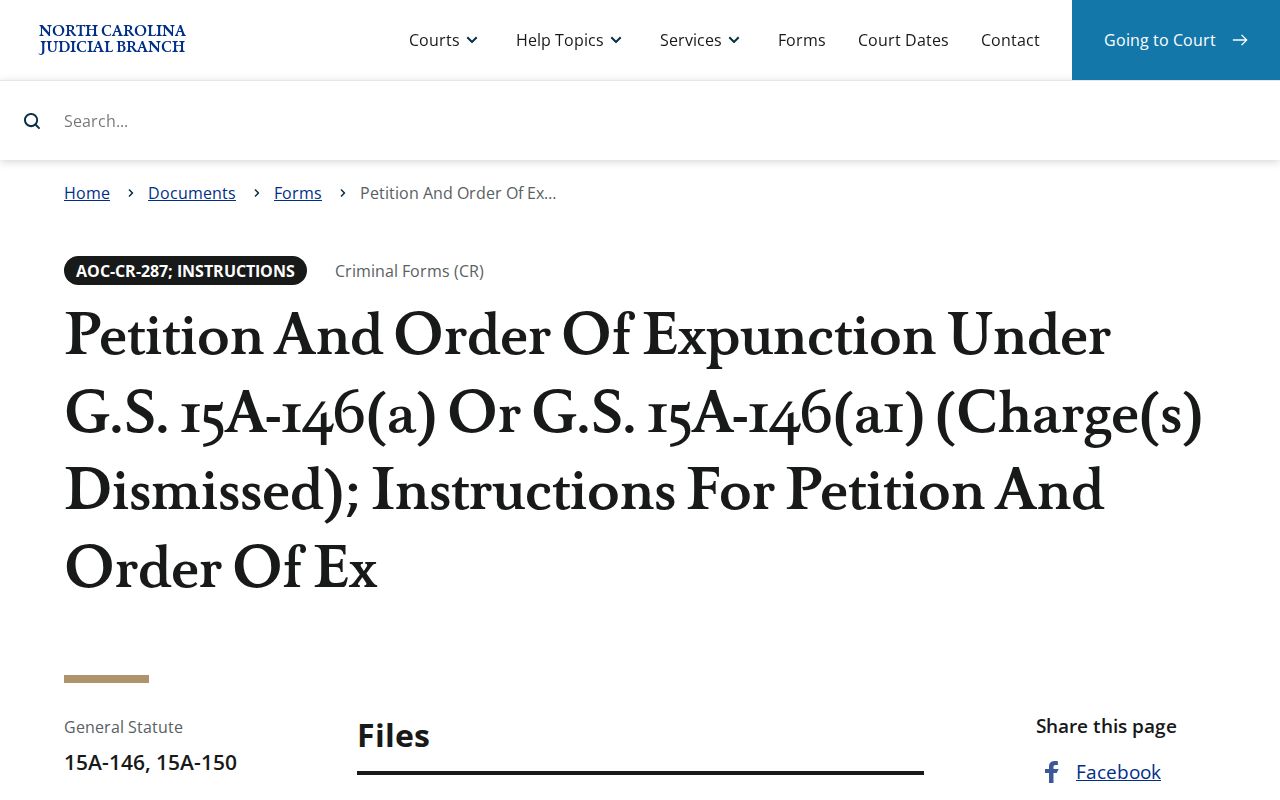
So a missing expunged file is not a normal Rockingham County court record search question.
Sealed Records and Public Access
G.S. 7A-109 opens the clerk's records, files, dockets, and indexes to inspection. Access runs during regular office hours, unless another law blocks it. The North Carolina Public Records Act, G.S. 132-1 sets the state framework and its minimal-cost policy. That policy still bends to confidentiality law and court-record rules. Portal access can be narrower than what the statute allows in person.
Key Rules:
G.S. 7A-109 requires clerk-maintained records, dockets, files, and indexes and provides the general inspection rule.
G.S. 7A-308 lists clerk service fees for copies, certificates, exemplifications, and criminal searches.
G.S. 7B-3000 restricts public inspection of juvenile court records.
Juvenile records, confidential special proceedings, sealed material, expunged files, and certain domestic-violence Portal data each need their own statute, order, or authorized-access process. A case labeled public is not a promise of public online display.